



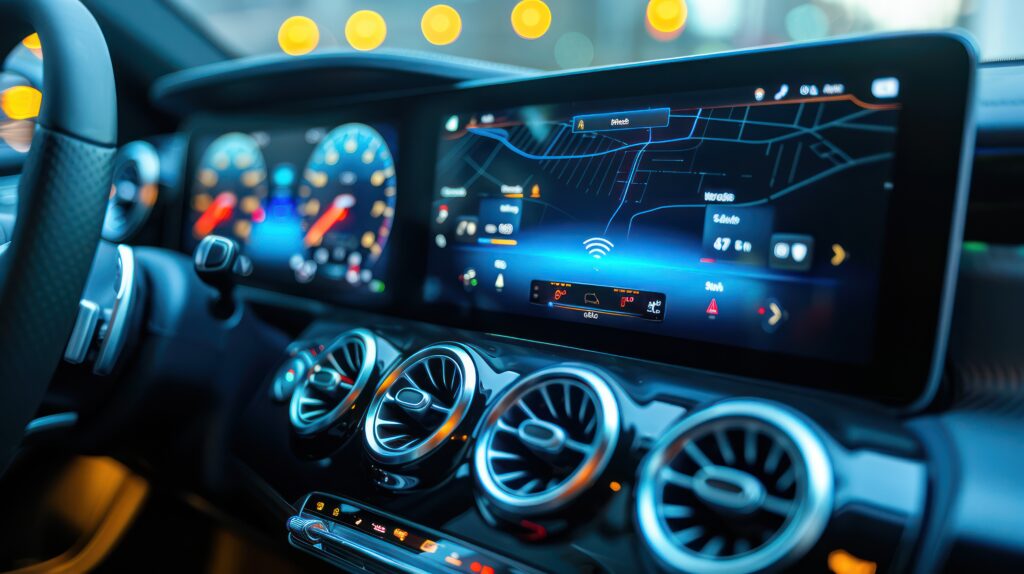
Infotainment HMI testing focuses on validating the human-machine interface used by drivers and passengers. This includes touchscreen behaviour, menus, voice interaction, display rendering and user workflows to ensure the infotainment system behaves reliably across different vehicle environments.
Automotive Infotainment Testing & Automation
T-Plan enables scalable automotive infotainment testing for validating in-vehicle infotainment systems and driver-facing interfaces.
Our platform supports infotainment system testing and infotainment HMI testing across simulation, lab and vehicle environments without modifying the system under test.
- In-vehicle infotainment testing (IVI) across embedded IVI platforms and automotive HMI systems
- Non-invasive automation for infotainment interfaces running on closed or embedded environments
- Scalable infotainment automation testing across simulation rigs and vehicle test environments
- Repeatable regression validation for infotainment UI workflows and connected vehicle features
Why Choose T-Plan for Automotive Infotainment Testing
Modern vehicles rely heavily on complex in-vehicle infotainment (IVI) systems that combine embedded software, touch interfaces and connected services. As part of broader automotive software testing, T-Plan enables scalable automotive infotainment testing by interacting directly with the visual interface, allowing engineers to validate infotainment workflows without modifying the underlying system.
This non-invasive approach allows testing teams to automate validation across simulation environments, test benches and vehicle platforms while maintaining the integrity of embedded systems and closed automotive environments. Infotainment platforms often interact with other vehicle technologies such as advanced driver assistance systems (ADAS), making consistent validation across vehicle interfaces essential.
- Non-invasive infotainment automation testing without modifying embedded IVI systems
- Visual validation of infotainment HMI interfaces, touchscreens and driver displays
- Reliable automation across simulation environments, lab rigs and test vehicles
- Scalable infotainment system testing across multiple platforms and configurations
Why Automate Infotainment System Testing
Infotainment systems are updated frequently as manufacturers introduce new features, connectivity services and user interface changes. Manual testing alone makes it difficult to consistently validate complex HMI workflows, media functionality and connected services across multiple environments.
Automated infotainment system testing enables engineering teams to repeat critical workflows consistently across releases, improving coverage while reducing manual effort. This helps ensure reliable driver interaction with infotainment systems across simulation, development and in-vehicle environments.
- Repeat infotainment HMI workflows across multiple releases and environments
- Improve regression coverage for navigation, media and interface features
- Detect UI and interaction issues across embedded infotainment platforms
- Reduce manual validation effort while accelerating development cycles
Key Benefits of Infotainment Automation Testing
Modern in-vehicle infotainment (IVI) systems combine embedded software, touch interfaces and connected vehicle services.
T-Plan’s automotive infotainment testing tools enable scalable infotainment automation testing across simulation environments, development benches and vehicle test platforms without modifying the system under test.
No-Code / Low-Code Automation
Enable engineers and QA teams to build scalable infotainment automation testing workflows without complex scripting.
Create Once, Reuse Across Environments
Define tests once and execute them across simulation rigs, development environments and vehicle test platforms.
Record and
Playback
Capture touchscreen interactions and user workflows across infotainment HMI interfaces for repeatable validation.
External Data
Integration
Drive infotainment system testing using structured data from APIs, files, databases or connected vehicle services.
Screen-Level
Automation
Interact directly with infotainment interfaces at the visual layer, supporting embedded and closed IVI systems.
Multi-Platform
Support
Execute tests across simulation environments, lab benches and in-vehicle test platforms.
Image-Based for True End-User Simulation
Verify infotainment UI behaviour exactly as drivers experience it within vehicle displays.
Third-Party
Integrations
Integrate automation with development pipelines and testing frameworks for structured automotive validation workflows.
The IVI Development Lifecycle
Automated High-Visibility Workflow
Development Cycle
Automation Coverage
Testing Infotainment Systems Across Automotive Development Environments
Automotive infotainment platforms are developed and validated across multiple environments, from early software simulation through to full vehicle integration. Reliable automotive infotainment testing must support each stage of this lifecycle while maintaining consistent validation of HMI behaviour and user interaction.
T-Plan enables scalable in-vehicle infotainment testing by interacting directly with the visual interface, allowing engineers to automate validation across development rigs, embedded environments and vehicle platforms without modifying the underlying system.
This approach allows teams to maintain consistent infotainment system testing throughout the development lifecycle while reducing manual effort and improving regression coverage.
- Validate infotainment HMI workflows across simulation and development environments
- Automate testing on hardware test benches and integrated vehicle platforms
- Ensure consistent behaviour across infotainment displays and driver interfaces
- Maintain repeatable validation across evolving IVI software releases
Supporting Automotive Infotainment and HMI Validation
For more than two decades, T-Plan has supported automotive software testing across vehicle interfaces, driver displays and embedded systems. Our visual automation platform enables reliable validation of in-vehicle infotainment (IVI) systems and driver-facing HMI interfaces without modifying the underlying environment.
From infotainment displays and touchscreen workflows to connected vehicle interfaces, automotive platforms require consistent validation across simulation environments, test benches and vehicle platforms. T-Plan enables repeatable infotainment automation testing by interacting directly with the visual interface, ensuring systems behave exactly as drivers experience them.
This non-invasive approach allows engineering teams to validate infotainment systems while maintaining the integrity of embedded environments and closed automotive platforms.




Trusted by Hundreds of Companies and Used by Thousands of People for Over 25 Years


































Explore Our Solutions
By Job
Explore Our Solutions
Automotive Infotainment Testing FAQs
Automotive infotainment testing is the process of validating in-vehicle infotainment (IVI) systems to ensure that media, navigation, connectivity and touchscreen interfaces function correctly. Testing typically includes infotainment HMI testing, performance validation and regression testing across simulation environments, development rigs and vehicle platforms.
An in-vehicle infotainment system combines information and entertainment functions within a vehicle’s central interface. IVI platforms typically include navigation, media playback, smartphone integration, voice control and vehicle settings, all accessed through touchscreen or HMI interfaces.
Common infotainment issues include touchscreen responsiveness problems, connectivity failures with mobile devices, navigation errors, slow system performance and inconsistent user interface behaviour. Automated infotainment system testing helps detect these issues early in the development lifecycle.
Engineers use specialised automotive infotainment testing tools capable of interacting with embedded systems and graphical interfaces. Tools such as T-Plan automate validation by interacting directly with the screen, enabling scalable infotainment automation testing across simulation environments, test benches and vehicle platforms.
Automotive software testing validates the reliability and safety of vehicle software systems, including infotainment platforms, driver assistance systems and electronic control units (ECUs). It ensures that vehicle systems behave correctly across hardware environments and user interactions.
ECU testing validates the behaviour of electronic control units that manage different vehicle functions. These systems communicate with infotainment platforms and other vehicle technologies, making integrated validation important within broader automotive software testing.
An infotainment test engineer is responsible for validating IVI systems, HMI interfaces and connected vehicle features. Their work typically involves creating test scenarios, validating user workflows, analysing system behaviour and supporting automated infotainment system testing across development and vehicle environments.