
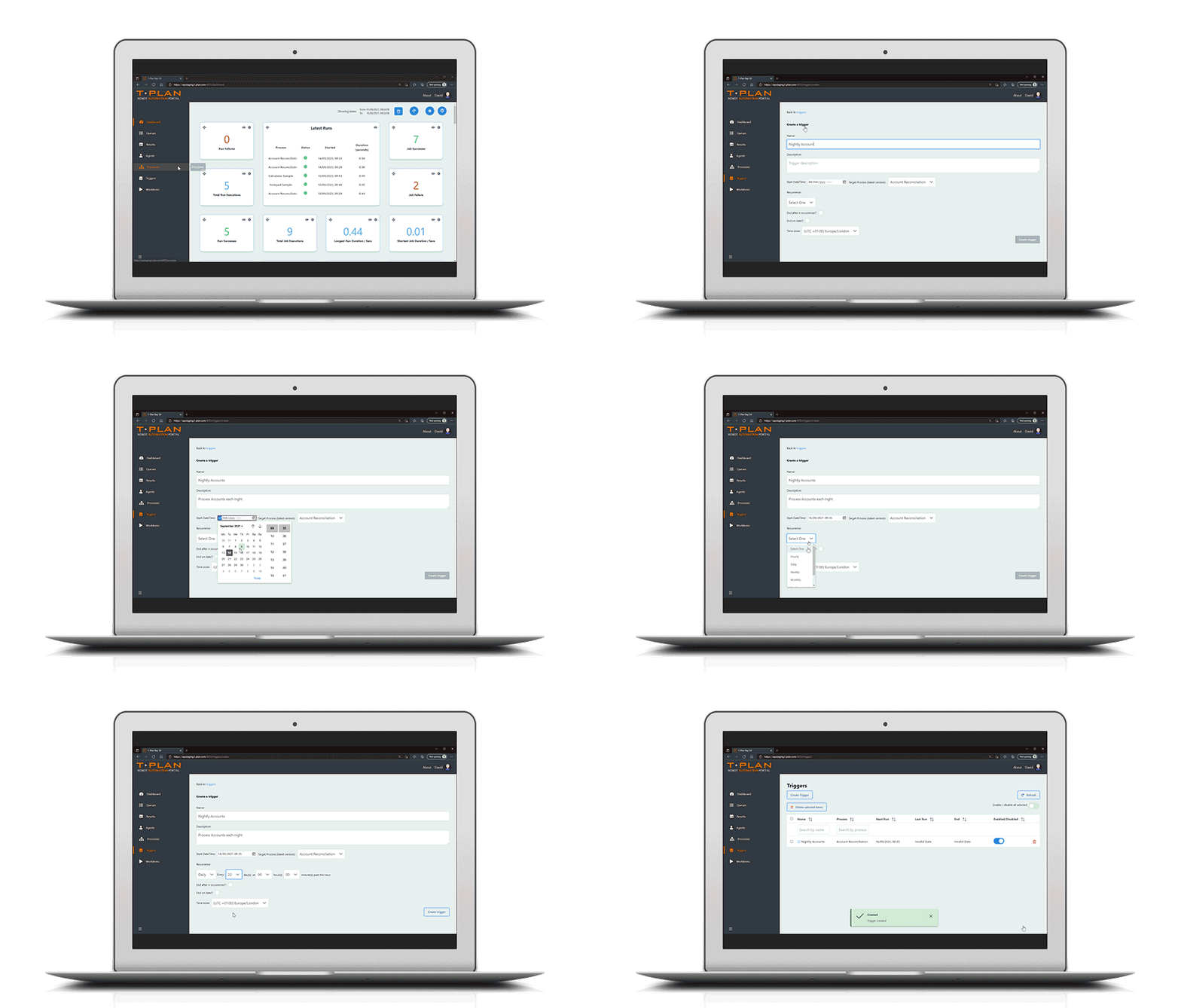
Compliance automation tools for evidence collection and control testing enable teams to automatically capture, store and validate outputs during testing. This supports audit trails, reduces manual documentation and ensures compliance requirements are met consistently.
Automated Compliance Testing
Automated compliance testing enables organisations to validate systems, controls and processes with speed and consistency.
T-Plan supports compliance testing automation across complex, cross-platform environments. It helps teams standardise validation, streamline evidence collection and maintain continuous compliance monitoring.
- Execute repeatable compliance testing across legacy and business-critical systems
- Support validation workflows including 21 CFR Part 11 compliance
- Capture audit-ready evidence for control testing and reporting
- Maintain consistent compliance monitoring across environments.
Why Choose T-Plan for Compliance Testing?
Highly regulated environments demand compliance testing that is reliable, repeatable and non-invasive.
T-Plan provides automated compliance testing software designed to validate complex workflows without modifying systems or introducing risk to controlled environments.
Key capabilities include:
- Non-invasive test automation
Execute compliance testing without impacting production systems or requiring code changes - End-to-end validation workflows
Automate validation across systems, applications and integrated processes - Audit-ready evidence collection
Capture detailed logs and outputs to support control testing and regulatory audits - Secure test execution
Operate within restricted environments to meet security and compliance requirements - Cross-platform support
Run consistent compliance testing across desktop, virtual and remote systems without rework or duplication.
Why Use Automated Compliance Testing?
Manual compliance testing is time-consuming, difficult to scale and prone to inconsistency. As regulatory requirements increase, maintaining audit readiness and validation coverage becomes more complex.
Automated compliance testing improves consistency, reduces risk and supports continuous compliance across regulated environments.
Key benefits include:
- Reduced manual effort
Automate repetitive compliance and validation tasks across systems - Improved accuracy and consistency
Ensure repeatable, rules-based execution for compliance testing - Faster validation cycles
Accelerate testing and reduce time required for audit preparation - Stronger compliance assurance
Support structured validation aligned to regulatory requirements such as 21 CFR Part 11 - Greater audit readiness
Maintain complete, traceable evidence for compliance reporting and inspections
Key Benefits of Automated Compliance Testing
Compliance testing in regulated environments requires accuracy, repeatability and full audit visibility. T-Plan enables automated compliance testing across complex systems, supporting validation, evidence collection and consistent execution without disruption.
No-Code
Required
Simplify compliance testing automation with an intuitive, low-code interface for faster validation setup
Create Once, Reuse Across Environments
Define compliance workflows once and execute consistently across test, staging and production environments
Record and
Playback
Capture user interactions to create repeatable compliance and validation test scenarios
External Data
Integration
Drive compliance testing using structured data from files, databases and external systems
Non-Invasive
Automation
Execute compliance testing without modifying systems or impacting controlled environments
Cross-Platform
Support
Execute compliance testing across Windows, Linux, virtual machines and remote systems from a single framework
Audit-Ready
Validation
Verify outputs and capture evidence to support regulatory audits and compliance reporting
Third-Party
Integrations
Integrate with existing tools and workflows to support end-to-end compliance testing processes
Compliance Testing Across Regulated Industries
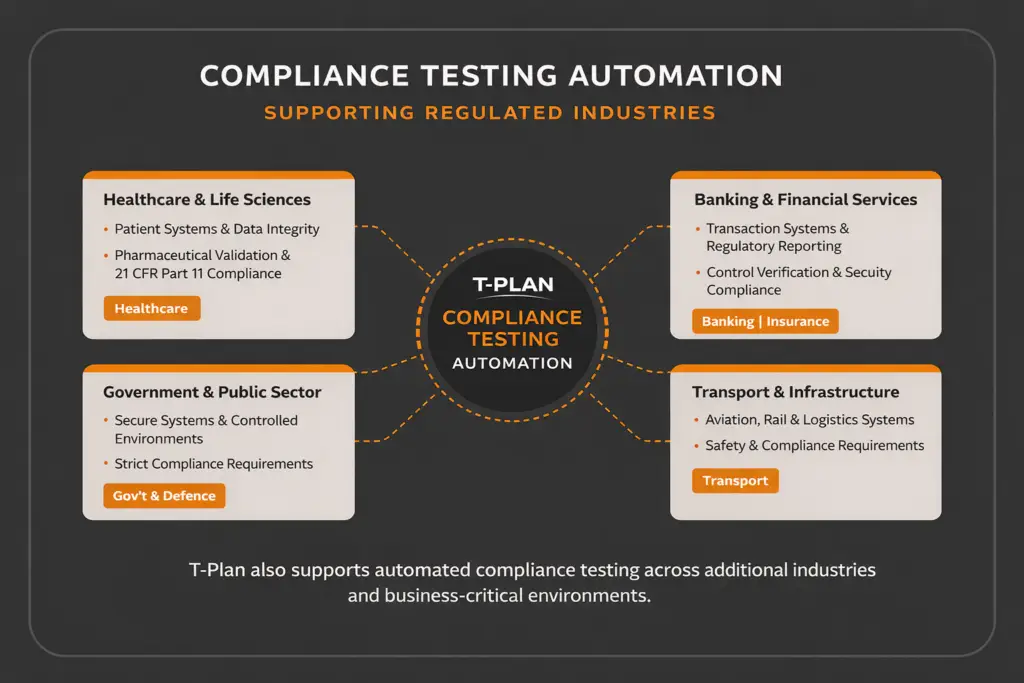
Compliance testing is critical across industries where systems, data and processes must meet strict regulatory standards. Reliable automation ensures validation, security and audit readiness are maintained without disruption.
T-Plan supports organisations operating in:
- Healthcare and Life Sciences – Patient systems, data integrity, validation and 21 CFR Part 11 compliance
- Banking, Financial Services and Insurance – Transaction systems, regulatory reporting and control validation
- Government and Public Sector – Secure systems requiring strict compliance and controlled environments
- Transport and Infrastructure – Aviation, rail and logistics systems with safety and compliance requirements
- Accounting and Enterprise Systems – Financial processes, audit controls and regulatory reporting
T-Plan also supports automated compliance testing across additional industries and business-critical environments.
Compliance Testing Automation: Use Case
T-Plan has supported organisations in highly regulated environments, including healthcare, to automate compliance testing and validation across business-critical systems.
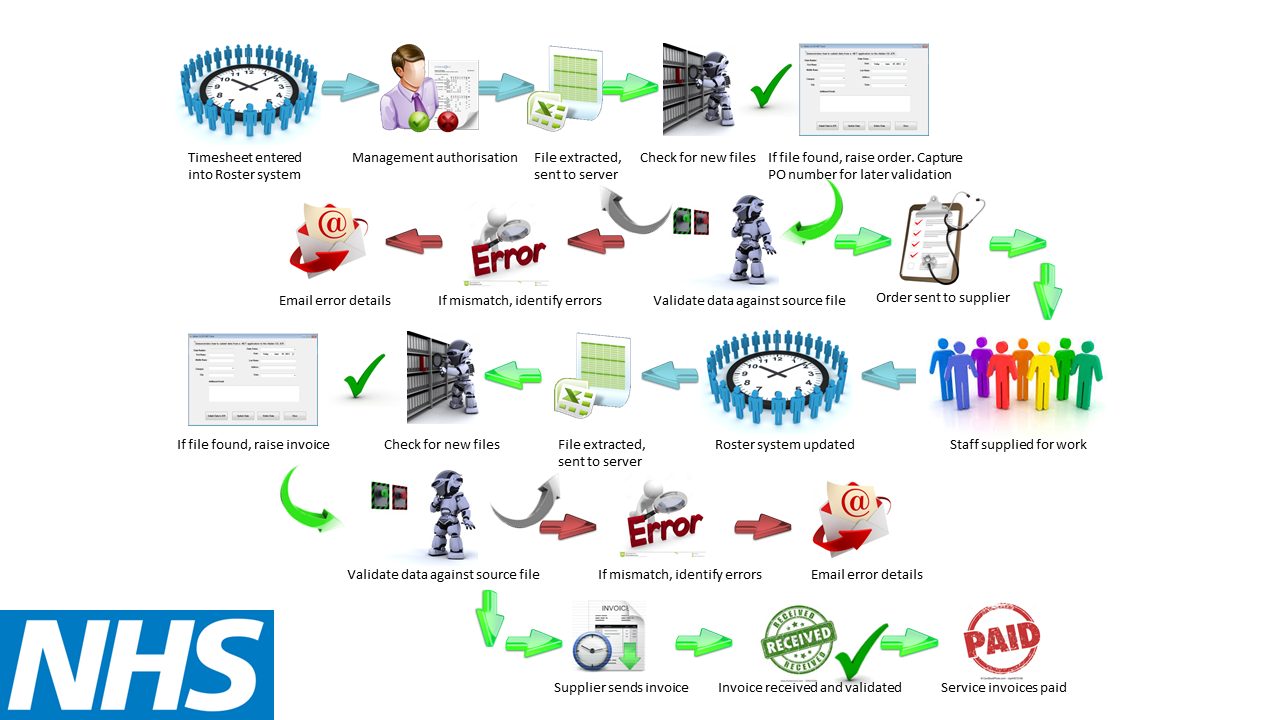
In one healthcare deployment supporting NHS services, manual validation processes were time-consuming and difficult to scale, making it challenging to maintain consistent audit evidence and compliance coverage.
Using T-Plan’s automated compliance testing software, the organisation reduced manual effort, improved consistency and established repeatable, audit-ready validation processes.
“What was previously a time-intensive validation process can now be completed in minutes. The ability to produce consistent, audit-ready results has significantly improved our compliance and operational efficiency.”

RPA
Project Manager
Trusted by Hundreds of Companies and Used by Thousands of People for Over 25 Years





























Platform Agnostic, Seamless Integration
Integration Capabilities
Integrates with a range of tools, including Selenium for script-less automated browser testing, and Jenkins for continuous integration, saving time & effort vs building and maintaining external testing frameworks.
Platform Agnostic
Automates GUI testing seamlessly across web and mobile platforms, supporting both Mac, Windows, and Linux environments with unified application, code, and file compatibility.
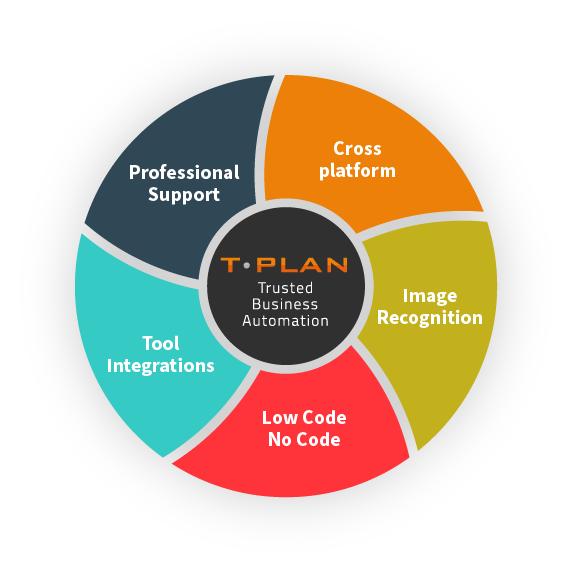
Image Recognition
Providing essential user feedback directly from the end-user’s perspective. Validated based on what is visually observed, not solely on the code’s output.
Code -Free Automation
An intuitive user interface designed for both technical and non-technical users, featuring drag-and-drop functionality. No Code / Low Code.
Compliance Testing FAQs
Automated compliance testing uses software to validate systems, processes and controls against regulatory requirements. It ensures consistent execution, reduces manual effort and helps organisations maintain audit-ready validation across complex environments.
Compliance testing automation ensures that validation processes are repeatable and consistently executed. It also captures detailed outputs and logs, enabling organisations to maintain accurate evidence for audits, control testing and regulatory reporting.
Yes, automated validation testing software can support 21 CFR Part 11 compliance by ensuring processes are repeatable, traceable and fully documented. This helps organisations maintain data integrity, validation control and regulatory alignment.
There are SaaS platforms that automate penetration testing and compliance monitoring, typically focused on security validation. T-Plan complements these by automating compliance testing, validation workflows and system-level control testing across business-critical applications.
Automated testing compliance in highly regulated industries such as healthcare, finance and defence ensures systems meet strict regulatory standards. It helps organisations reduce risk, improve consistency and maintain continuous compliance across complex environments.
Compliance testing automation tools are used to validate systems, automate control testing, support audit processes and ensure consistent execution of compliance workflows across multiple environments.
The best automated penetration testing for security compliance depends on the organisation’s security requirements and infrastructure. While penetration testing tools focus on identifying vulnerabilities, T-Plan supports broader compliance testing automation by validating processes, controls and system behaviour.