For organisations with established automation, the decision can involve existing test libraries, team knowledge, infrastructure, security requirements, licensing and the potential disruption of moving from one platform to another.
T-Plan, Ranorex and Eggplant are all established commercial automation platforms, but they take different approaches and are suited to different requirements.
So how do they compare in 2026?
T-Plan, Ranorex and Eggplant at a Glance
T-Plan Robot
T-Plan takes a visual, technology-agnostic approach to automation, interacting with applications through their user interface rather than depending on the underlying application technology.
This makes it particularly suited to organisations working across mixed technology estates, including desktop, web, mobile, virtualised and legacy applications.
The same platform can also be used for both UI test automation and Robotic Process Automation (RPA), allowing organisations to automate testing and wider business processes without introducing separate automation platforms.
Particularly suited to:
- Complex or mixed technology environments
- Visual UI testing
- Desktop, web and mobile automation
- Legacy applications
- VDI and remote environments
- Secure and on-premise deployments
- Organisations looking to combine test automation and RPA
Ranorex Studio
Ranorex is an established GUI test automation platform with strong object-based testing capabilities for desktop, web and mobile applications.
Its recording tools, object repository and integration with common development and CI/CD environments make it particularly attractive to QA teams looking for structured functional test automation.
Ranorex can be a strong choice where applications expose reliable UI objects and teams want close integration with established testing and development workflows.
Particularly suited to:
- Functional GUI testing
- Windows-centric environments
- Web and mobile application testing
- Teams using object-based automation
- Integration with CI/CD workflows
Eggplant
Eggplant has built a strong reputation around intelligent, image-based and model-based test automation.
Its approach allows teams to automate applications from the user’s perspective and makes it particularly relevant where testing needs to span different technologies, devices and interfaces.
Eggplant also offers capabilities around AI-assisted automation and exploratory/model-based testing, making it a sophisticated option for large enterprise testing environments.
Particularly suited to:
- Enterprise-scale test automation
- Image-based automation
- Complex cross-platform environments
- Model-based testing
- Organisations looking for AI-assisted testing capabilities
Where Do the Platforms Differ?
Although all three platforms can automate user interfaces, the way they achieve this differs considerably.
Visual vs Object-Based Automation
One of the biggest differences is how automation interacts with the application being tested.
Object-based automation identifies elements within an application’s underlying structure. This can provide precise control when those objects are accessible and stable.
Visual automation instead interacts with what appears on screen.
T-Plan uses visual recognition to automate applications from the user interface, making it independent of the underlying application technology. This can be particularly valuable when working with legacy applications, remote desktops, virtual machines, custom interfaces or systems where conventional object recognition is unavailable or unreliable.
Ranorex has strong object-based capabilities alongside image comparison functionality, while Eggplant also has a well-established image-based approach.
The right choice therefore depends heavily on the applications and environments you need to automate.
Cross-Platform and Legacy Environments
Modern enterprise technology estates are rarely uniform.
A single organisation might need to automate a Windows desktop application, a browser-based system, an Android device, a virtual desktop and a legacy application that was developed many years ago.
This is where technology independence becomes particularly important.
T-Plan supports automation across Windows, macOS, Linux, iOS and Android and can interact with applications through technologies including VNC, RDP and KVM.
Because automation takes place at the visual UI level, teams can also work with applications where access to the underlying code or object structure is limited.
For organisations with highly standardised application estates, this level of independence may not be essential. For organisations managing mixed or ageing technology, however, it can significantly simplify automation.
Test Automation and RPA
Another consideration is whether automation stops at software testing.
Testing teams increasingly automate processes that cross the traditional boundary between QA and business operations. The same interaction – opening an application, entering data, validating a result and moving information between systems – can form part of either a software test or a business process.
T-Plan Robot supports both UI test automation and RPA within the same platform.
For organisations already operating separate testing and RPA platforms, consolidating automation can potentially reduce tool proliferation, training requirements and ongoing administration.
Whether this matters will depend on the organisation. Businesses looking purely for functional software testing may not require RPA capability, while those with broader automation ambitions may see considerable value in having both.
Security and Deployment
Deployment model has become an increasingly important consideration, particularly for organisations operating in defence, government, healthcare, financial services and other regulated environments.
Cloud automation can offer convenience and scalability, but it isn’t appropriate for every organisation or every system.
T-Plan can be deployed on-premise and used in secure environments where applications or test data cannot be exposed to external cloud services.
For organisations evaluating any automation platform, questions worth asking include:
- Where will test data be processed?
- Does the platform require cloud connectivity?
- Can it operate within an isolated environment?
- What access does the automation vendor require?
- Can automation work with legacy or restricted systems?
- How are tests, results and audit information controlled?
These considerations can be just as important as the automation features themselves.
Licensing and Scalability
Licensing is another area where seemingly similar automation products can differ significantly.
T-Plan uses concurrent licensing, allowing licences to be shared between users rather than permanently assigned to an individual.
For teams where automation usage varies across testers, developers or business users, this can provide greater flexibility as requirements change.
When comparing platforms, organisations should therefore look beyond the headline licence price and consider how many licences will actually be required, how execution is licensed, how the team is expected to grow and whether additional products are needed to deliver the complete automation requirement.
What About Existing Tests?
For organisations already using Ranorex, Eggplant or another automation platform, perhaps the biggest consideration isn’t which product has the strongest feature list.
It’s what happens to the automation you’ve already built.
Years of test development can create a significant investment in scripts, processes and internal knowledge. Understandably, organisations can be reluctant to move if doing so means rebuilding everything from scratch.
T-Plan has been developing AI-assisted migration capabilities designed to help organisations move existing automation into T-Plan while retaining more of that previous investment.
This doesn’t mean migration is effortless, and organisations should assess the complexity and suitability of their existing tests before changing platforms. But the existence of an established test library should not automatically prevent a business from reviewing whether its current platform remains the right choice.
Which Platform Is Right for You?
There isn’t a universal winner.
Ranorex may be a good fit for teams looking for structured object-based GUI automation and strong integration into conventional QA and development workflows.
Eggplant provides sophisticated image-based and intelligent automation capabilities for organisations with complex enterprise testing requirements.
T-Plan is particularly strong where organisations need technology-independent visual automation across mixed, legacy, remote or secure environments – and where combining test automation and RPA within one platform provides additional value.
The important question isn’t simply which platform has the longest feature list.
It’s which approach best fits the applications, infrastructure, security requirements and automation strategy your organisation actually has.
Considering a Change?
If you’re currently using another commercial automation platform, changing tools doesn’t necessarily have to mean writing off your previous investment.
T-Plan can help assess your existing automation, explore migration options and determine whether Robot Enterprise is a suitable alternative for your environment.
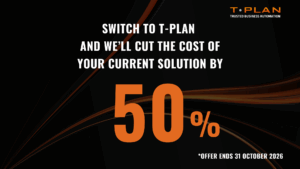
For a limited period, T-Plan is also offering organisations switching from another automation provider 50% off the qualifying cost of their current competitor contract.
Explore the 50% Switch Offer
Offer available until 31 October 2026. Eligibility and terms apply.