What happens when software testing becomes so autonomous that humans are barely involved?
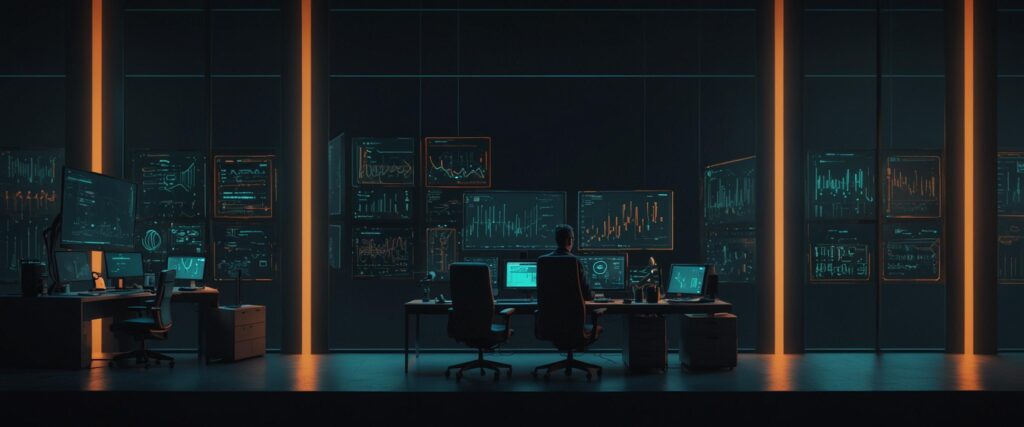
The software testing industry is moving towards a new model: the dark testing factory. A concept where AI agents can explore applications, generate and execute tests, analyse results and maintain automation with increasingly limited human intervention.
In September 2026, UiPath outlined its vision for increasingly autonomous software testing, highlighting how AI agents could transform the testing lifecycle.
It’s an interesting development, with the potential to accelerate releases, reduce manual effort and enable continuous testing at scale.
But it also raises an important question: as testing becomes more autonomous, who independently verifies the results?
When automated tests pass, what might they miss?
AI-driven testing can identify defects, validate expected behaviours and accelerate test execution. However, a passing test doesn’t necessarily mean an application is working correctly from the user’s perspective.
Visual inconsistencies, confusing interfaces, unexpected workflows and gaps in test coverage can still go undetected, particularly when tests are generated and evaluated against incomplete requirements.
If AI is responsible for creating, running and interpreting tests, organisations need confidence that the system isn’t simply confirming its own assumptions.
Can a dark testing factory work in regulated environments?
For organisations operating in defence, healthcare, finance and other business-critical sectors, testing involves more than speed and efficiency.
Software must behave consistently across different platforms and environments. Testing must also support security requirements, traceability and accountability.
Autonomous testing may play an increasingly valuable role, but organisations still need to establish how results are independently verified, how unexpected behaviour is identified and when human intervention is required.
The future of testing needs independent verification
At T-Plan, we see autonomous testing as an opportunity to improve software quality, not replace the principles that underpin it.
Our technology-agnostic visual UI test automation supports repeatable verification across applications, operating systems and complex environments, including legacy systems.
Visual verification provides an additional layer of assurance by checking what actually appears on screen, rather than relying solely on underlying application logic or AI-generated assertions.
The future of software testing may well be increasingly autonomous.
But the measure of success shouldn’t simply be how many tests run without human involvement. It should be how confidently we can trust the results.