






























Insurance Software Testing & Test Automation

T-Plan enables scalable insurance test automation and robotic process automation (RPA) across policy administration systems, claims platforms and customer portals without modifying the system under test.

Key capabilities include:

  • Automated testing in insurance across policy, claims and underwriting systems
  • RPA automation for claims processing, reconciliation and operational tasks
  • Non-invasive automation for legacy and mainframe insurance platforms
  • Repeatable regression testing across portals and core insurance applications
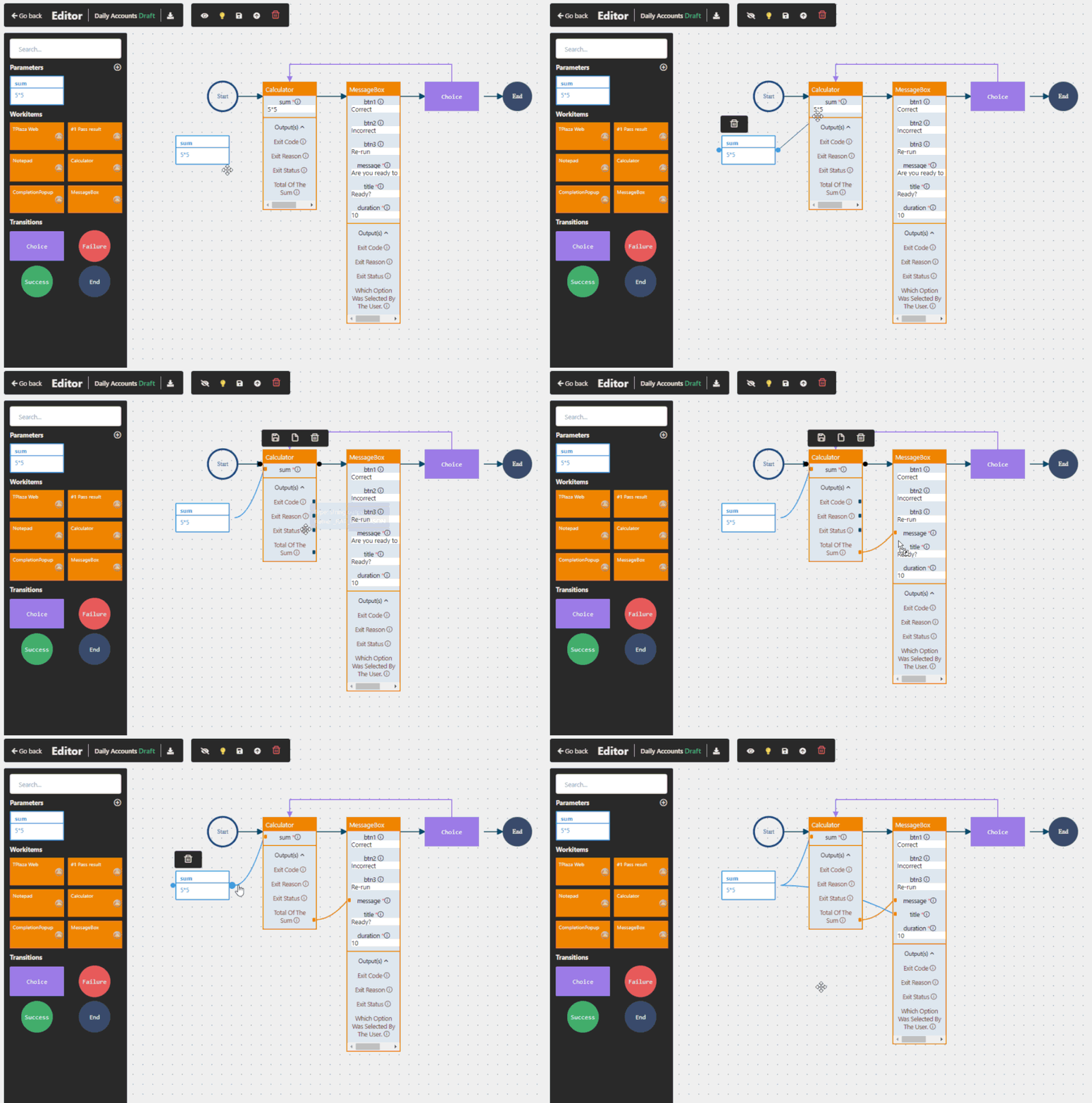
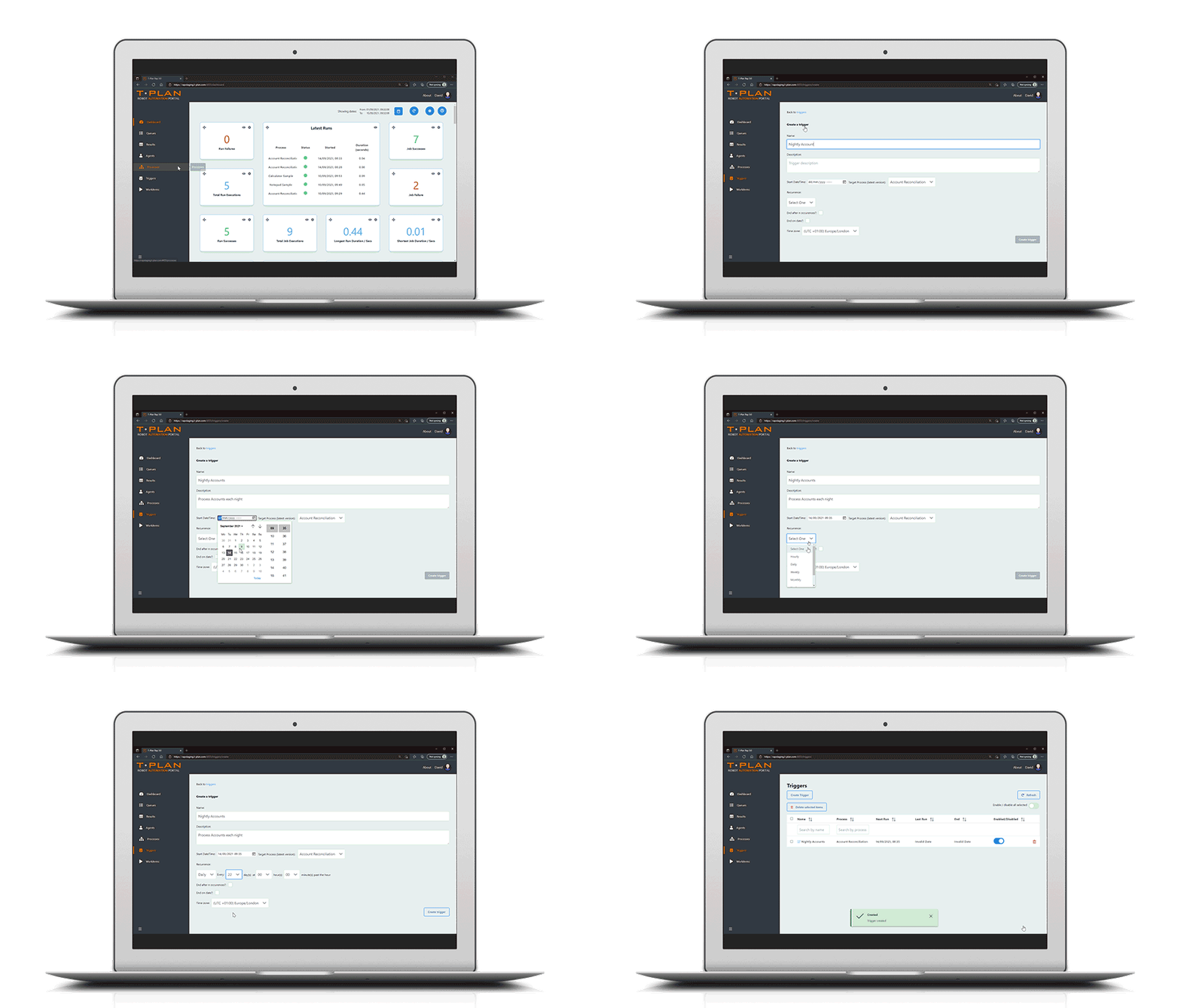
Demonstration of T-Plan

Why Choose T-Plan for Insurance Test Automation

Insurance organisations operate across a mix of legacy policy systems, modern digital platforms and complex operational workflows. T-Plan enables scalable insurance test automation by interacting directly with applications at the user interface level, removing the need for intrusive agents or system modification.

This allows teams to validate policy administration, claims processing and customer portal journeys while maintaining the integrity of the underlying platform. The same automation framework can also support robotic process automation (RPA) for repetitive operational tasks.

  • Non-invasive automation across legacy insurance platforms and mainframe systems
  • Visual validation of claims, underwriting and policy workflows
  • Unified platform supporting test automation and RPA
  • Scalable automation across web, desktop and host environments

Why Automate Insurance Software Testing

Insurance platforms evolve continuously as policies change, regulations update and digital services expand. Manual testing alone makes it difficult to validate the complex workflows that exist across policy systems, customer portals and backend integrations.

Automated testing enables teams to repeat critical processes consistently across releases while improving test coverage and reliability. When combined with automation of operational workflows, organisations can accelerate delivery while maintaining confidence in system stability.

  • Repeat complex insurance workflows across environments and releases
  • Improve regression coverage across policy, claims and portal systems
  • Detect integration issues between legacy and modern applications
  • Reduce manual effort while supporting faster platform updates

Key Benefits of Insurance Test Automation with T-Plan

Insurance platforms often combine legacy policy systems, modern digital services and complex operational workflows. T-Plan provides scalable insurance test automation and robotic process automation (RPA) that operates non-invasively across these environments, enabling teams to validate applications and automate processes without modifying the underlying systems.

No-Code / Low-Code Automation

Enable both technical and business teams to build scalable insurance automation workflows without complex scripting frameworks.

Create Once, Reuse Across Environments

Define automation once and execute across development, testing, UAT and production-like environments.

Record and
Playback

Capture real user interactions within policy administration, claims and portal systems for repeatable validation.

External Data
Integration

Drive automation using structured data from spreadsheets, databases, APIs or external insurance systems.

Screen-Level
Automation

Interact directly with applications through the user interface, supporting legacy and mainframe insurance platforms.

Multi-Platform
Support

Execute tests across Windows, Linux, virtual environments and browser-based applications from a single platform.

Image-Based
Validation

Verify outputs visually to ensure interfaces behave exactly as users experience them.

Third-Party
Integrations

Align automation with CI/CD pipelines and release processes for reliable end-to-end testing.

Automating Insurance Systems Without Disrupting Legacy Platforms

Many insurance organisations still rely on legacy infrastructure such as mainframe policy systems, claims platforms and underwriting applications. These environments are often business-critical, tightly controlled and difficult to integrate with traditional automation tools.

T-Plan enables automation and testing without modifying the system under test. By interacting directly at the user interface level, teams can validate workflows and automate processes across both modern and legacy environments while maintaining system integrity and security policies.

This approach allows insurers to modernise testing and operational workflows while protecting the stability of long-running core platforms.

  • Automate testing across mainframe and legacy insurance systems without installing agents
  • Validate policy, claims and underwriting workflows through the real user interface
  • Maintain security controls and compliance across restricted environments
  • Reduce operational costs by automating repetitive validation and data processing tasks
  • Scale regression testing across customer portals and backend insurance platforms

Supporting Key Regulatory & Security Frameworks in Insurance Platforms

Insurance platforms operate within strict financial, regulatory and data protection frameworks. Testing and automation must support validation of sensitive customer data, financial transactions and operational workflows while maintaining compliance with national and international regulations.

T-Plan’s non-invasive automation enables testing and validation across insurance systems without modifying the underlying platform. This allows organisations to maintain system integrity while producing clear, traceable evidence of testing activity across regulated environments.

Insurance platforms often align with frameworks including:

GDPR

Protects customer data across insurance platforms operating in the EU and UK.

ISO 27001

Information security management standard widely used across financial services.

SOC 2

Ensures secure handling of customer and financial data within service providers.

PCI DSS

Protects payment information for insurance billing and customer portals

Solvency II

EU regulatory framework governing insurance risk management and financial stability.

NAIC Model Laws

Regulatory standards used across US insurance markets.

OWASP

Security guidelines for protecting insurance web applications and portals.

NIST

Cybersecurity framework often adopted by financial institutions and insurers.

Trusted by Hundreds of Companies and Used by Thousands of People for Over 25 Years

Insurance Test Automation FAQs

Automation in insurance refers to the use of software to execute repetitive processes such as claims validation, policy administration, underwriting workflows and customer portal testing. Insurance automation can include both test automation for validating applications and robotic process automation (RPA) for operational tasks such as data entry, reconciliation and document processing.


Common examples of automated testing in insurance include validating claims processing workflows, testing customer portals, verifying underwriting systems and running regression tests on policy administration platforms. Automation can also validate integrations between legacy systems, mainframe platforms and modern web applications.

While definitions vary, most automation strategies focus on four core pillars:

Test coverage – validating critical business workflows and system integrations
Reliability – producing repeatable and consistent results
Scalability – executing tests across multiple platforms and environments
Maintainability – keeping automation stable as systems evolve

These principles help organisations build a sustainable enterprise test automation framework.

Automated test coverage refers to the proportion of an application’s functionality that is validated through automated testing. High coverage ensures that key workflows such as claims processing, policy updates and customer interactions are consistently tested across releases.

Insurance organisations use a variety of automation testing tools depending on their environment. These can include web testing frameworks, enterprise automation platforms and specialised tools capable of interacting with legacy or mainframe systems. Platforms such as T-Plan enable non-invasive automation across web, desktop and legacy applications, making them particularly useful in insurance environments where multiple technologies coexist.

The “3 Ds” commonly referenced in insurance operations are data, decisioning and digital experience. Modern insurance platforms rely on accurate data processing, automated decision-making and seamless digital services for customers, which is why reliable software testing and automation are critical.

Test Automation in the Accounting Sector

Book your FREE demo

You’re just one step away from saving time & money – get in touch today.

  • No code access required
  • Visual UI testing tool
  • iOS and Mac compatible
  • All platforms supported
  • Mimics real time user experience
  • Record and playback function
  • Award winning support

Book your FREE demo

Get in touch with our award-winning team today and unlock the power of our Automated Visual UI testing tool for your business.