As software teams scale, the demands on their test automation frameworks grow rapidly—so it’s no surprise that many organisations are re-evaluating their tech stacks to ensure they’re future-proof.
We recently ran a poll to ask the testing community:
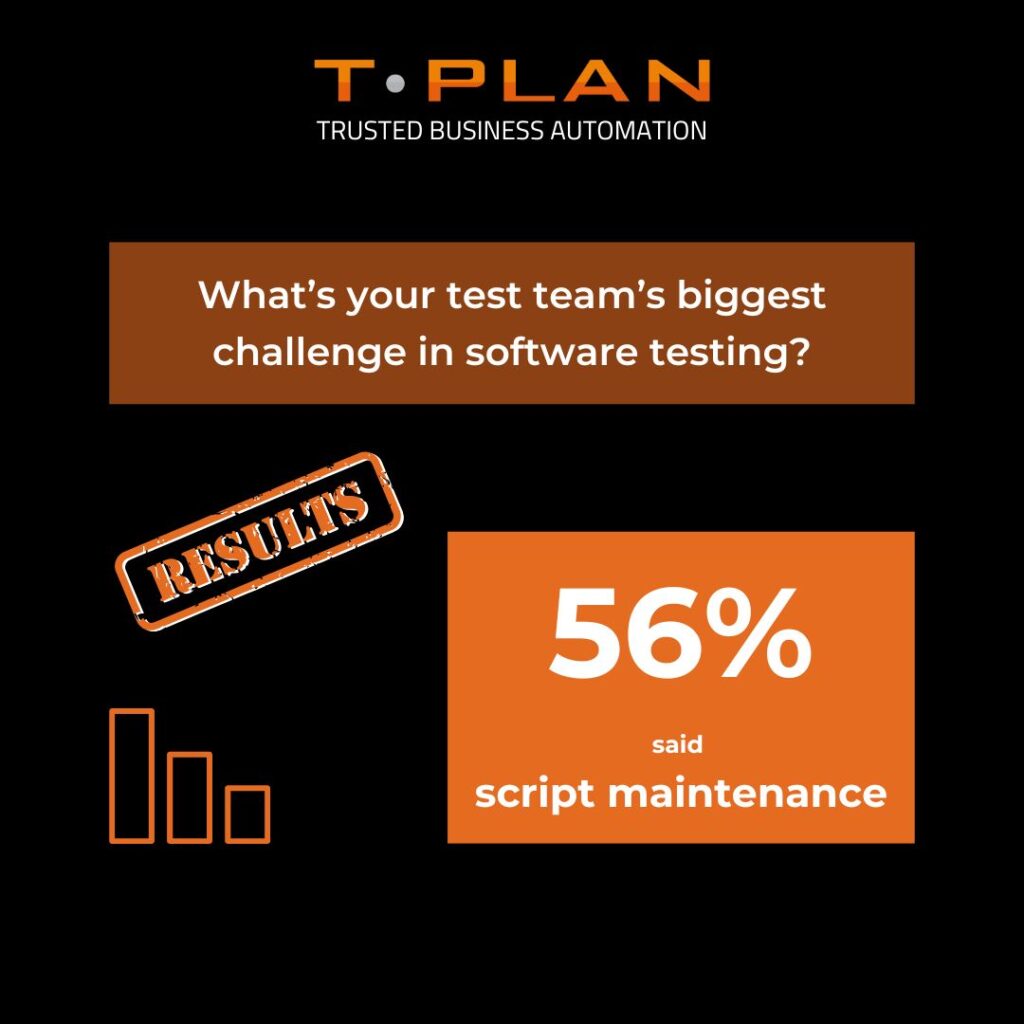
What’s your test team’s biggest challenge in software testing?
Here’s what they told us:
- 56% – Script maintenance
- 22% – Cross-platform testing
- 22% – Hard-to-use solutions
- 0% – High automation costs
The message is clear: maintenance headaches, brittle tools, and platform limitations are undermining test efficiency—not costs.
And this brings us to one of the biggest questions we hear from scaling companies:
“We need a testing solution that’s future proof and without the risks of open source—what are our options?”
The Risks of Open-Source Test Automation
Open-source frameworks like Selenium and Appium have their place, especially for small teams with deep technical expertise. But for growing businesses—especially those operating in regulated, complex, or security-sensitive industries—the cracks can quickly begin to show.
Common issues with open-source tools include:
- High maintenance & technical expertise required
- Security & compliance risks
- Limited scalability and integration challenges
- No official support, SLAs, or updates
- Lack of visual UI testing capabilities
- Limited built-in reporting
- Hidden costs from plugins, infrastructure, and staffing
The T-Plan Alternative: Scalable, Secure, and Platform-Agnostic
At T-Plan, we offer a secure, professional-grade test automation platform designed to grow with you. Our image-based UI automation technology is truly platform-agnostic—meaning one tool can test across:
As your technology evolves, T-Plan evolves with it, giving you complete flexibility without switching tools or rewriting scripts.
Why Leading Teams Choose T-Plan Over Open Source
No open-source risks – trusted code, no unknown contributors
- Dedicated support & maintenance – never deal with outdated frameworks alone
- Full control – you own your automation IP
- Security-first architecture – ideal for defence, finance, and healthcare
- Low-code/no-code interface – anyone can automate, not just engineers
- Scalable licensing – only pay for what you need, with on-premise options
Who Should Use Open-Source Tools?
- Great for: Startups, small teams, or those with strong dev/test engineering resources
- Not ideal for: Enterprises that need scalability, security, visual validation, and robust support
Is your current automation strategy holding you back?
We’ve helped teams in defence, healthcare, and finance transform their testing approach—with faster deployment, lower maintenance, and full platform coverage. Get in touch today.