
Cross browser testing is important because users access websites through a wide range of browsers, devices and operating systems. Even small inconsistencies can impact usability, conversions and brand trust. Automated cross browser testing helps ensure reliable, consistent user experiences for all visitors.
Cross-Browser Test Automation Tool
Test your websites and apps across any browser, on any device and on any OS. T-Plan Robot is the smart choice for low or no-code cross-browser testing tools.
Trusted by Hundreds of Companies and Used by Thousands of People for Over 25 Years

































Why Choose T-Plan for Cross-Browser Testing?
Cross-browser testing is about more than basic compatibility checks. Web applications must behave and appear consistently across browsers, devices and operating systems, often within fast-moving release cycles.
T-Plan provides a visual, platform-agnostic approach to automated browser testing, enabling teams to validate complete user journeys exactly as they appear on screen. By working at the GUI level, T-Plan reduces reliance on fragile browser structures, helping teams create more stable and maintainable tests.
Designed to support both modern and legacy web applications, T-Plan is well suited to complex environments where traditional browser automation tools struggle. Low-code automation and visual validation allow teams to scale cross-browser testing efficiently while reducing ongoing maintenance.
Key benefits include:
- Reliable cross-browser testing across Chrome, Firefox, Edge, Safari and more
- Visual validation that detects layout, rendering and UI issues code-level checks miss
- Low-code automation that reduces test creation time and ongoing maintenance
- Support for dynamic, responsive and legacy web interfaces
- Scalable execution across devices, platforms and environments.
Why Automate Web Browser Testing?
Users expect websites and web applications to perform consistently across every browser, device and operating system. A single broken journey uncovered during cross browser testing can lead to lost revenue, frustrated users and increased support costs.
Manual web browser testing quickly becomes unsustainable as applications grow and release cycles shorten. Automated browser testing software enables teams to maintain quality while delivering updates faster and with greater confidence.
Cross browser testing tools help organisations achieve:
- Validate user journeys consistently across Chrome, Firefox, Edge, Safari and more
- Speed up regression testing by re-running full test suites in a fraction of the time
- Release more frequently with confidence, knowing critical paths are automatically validated
- Free testers for higher-value work such as exploratory testing and UX improvements
- Run tests in parallel overnight, maximising infrastructure efficiency
- Reduce browser-specific defects, ensuring consistent user experiences.
The Cross Browser Testing Advantage
Automated browser testing transforms manual, error-prone processes into reliable quality safeguards. Cross browser testing platforms help ensure functionality and layout behave predictably across environments, protecting user experience while supporting performance, usability and trust.
Benefits of T-Plan’s Cross-Browser Testing Platform
Real browsers,
any device
Run automated browser testing on real browsers and devices across operating systems for accurate, real-world results.
Low-code browser automation
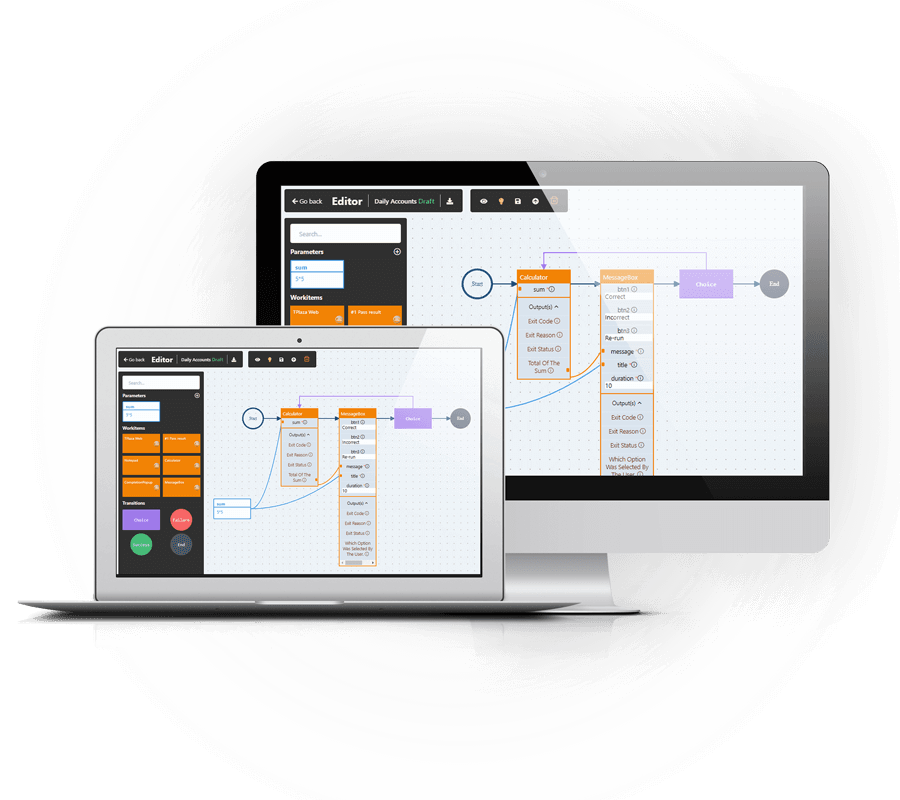
Create and maintain automated browser tests using a low-code interface with capture and playback, without complex scripting.
CI/CD & toolchain integration
Embed cross browser testing into existing workflows, including CI/CD pipelines such as Jenkins, for continuous web validation.
True cross-browser
user journeys
Visually validate web applications as users experience them across browsers, devices and screen resolutions.
Screen-level
browser testing
Test web applications directly at the UI level, ideal for dynamic content, responsive layouts and modern web frameworks.
Lower web
testing costs
Reduce the cost of manual web browser testing by replacing multiple environments with a single automated solution.
Secure remote
execution
Run browser tests remotely in virtual or isolated environments using RDP or VNC, with no footprint on target systems.
Data-driven
web testing
Drive browser tests using live data from APIs, spreadsheets and databases to reflect real-world web scenarios.
Selenium Testing with T-Plan
Selenium WebDriver remains a popular choice for browser automation, but many teams encounter challenges when applications become more dynamic, visually complex or frequently updated.
T-Plan complements Selenium testing by adding visual validation and cross-platform execution. This enables teams to extend existing Selenium investments while improving test reliability and reducing maintenance caused by DOM or locator changes.
Using T-Plan alongside Selenium helps teams:

What Our Customers Have To Say About Us

6 hour process now takes 10 minutes. Our virtual robots have saved time, effort money & resource .”
Reduced man hours by approximately 1 hour per day per tester. At that level, saving us 32.5 hours per week – a considerable cost saving.”
Cross Browser Testing: Any browser, any device, any OS
With cross browser testing tools, you can handle fragmented web and device journeys within a single testing platform. T-plan robot integrates with your current tech stack or CI/CD pipeline so you can deliver a seamless user experience across all browsers, devices and operating systems.
Support at every stage
Extensive Training & Learning Centre
Online workshops tailored to your key objectives
Live chat
support
Frequent product updates & new feature releases
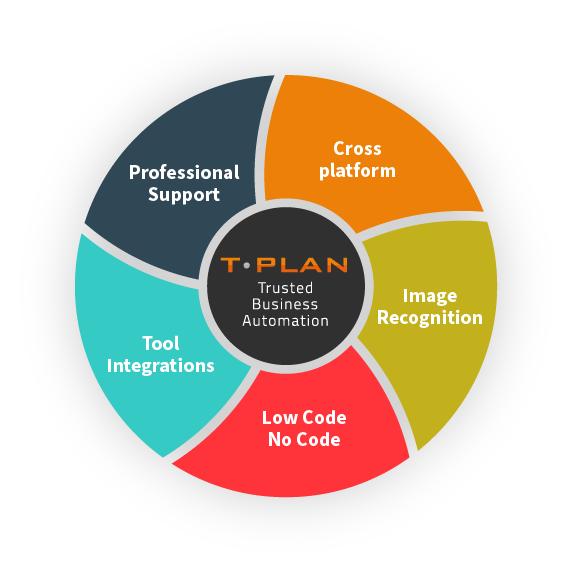
Platform Agnostic, Seamless Integration
Integration Capabilities
Integrates with a range of tools, including Selenium for script-less automated browser testing, and Jenkins for continuous integration, saving time & effort vs building and maintaining external testing frameworks.
Platform Agnostic
Automates GUI testing seamlessly across web and mobile platforms, supporting both Mac, Windows, and Linux environments with unified application, code, and file compatibility.
Image Recognition
Providing essential user feedback directly from the end-user’s perspective. Validated based on what is visually observed, not solely on the code’s output.
Code -Free Automation
An intuitive user interface designed for both technical and non-technical users, featuring drag-and-drop functionality. No Code / Low Code.
Cross-browser testing software FAQs
A web browser test checks how a website or web application behaves in a specific browser, such as Chrome, Firefox, Edge or Safari. This includes validating layout, functionality, performance and user interactions to ensure everything works as expected. Modern teams use automated tools to run browser tests consistently and repeatedly across different environments.
To test web pages in different browsers effectively, teams use a cross browser testing platform that allows the same test scenarios to run across multiple browsers, devices and operating systems. This approach ensures consistent behaviour and appearance without manually repeating tests for each browser, helping identify browser-specific issues earlier.
You can automate cross browser testing using automated browser testing software that runs the same test scenarios across multiple browsers in parallel. Tools such as T-Plan combine browser automation with visual validation, helping teams detect layout, rendering and interaction issues that code-level checks alone may miss.
Manual browser testing involves checking web pages by hand across different browsers, which can be time-consuming and error-prone. Automated browser testing uses software to execute tests repeatedly and consistently, improving accuracy, scalability and speed, especially for regression testing and frequent releases.
Yes. Cross browser testing can be integrated into CI/CD pipelines so browser tests run automatically during build and release stages. Platforms such as T-Plan support integration with existing delivery workflows, enabling teams to identify browser-specific issues earlier in the development lifecycle.