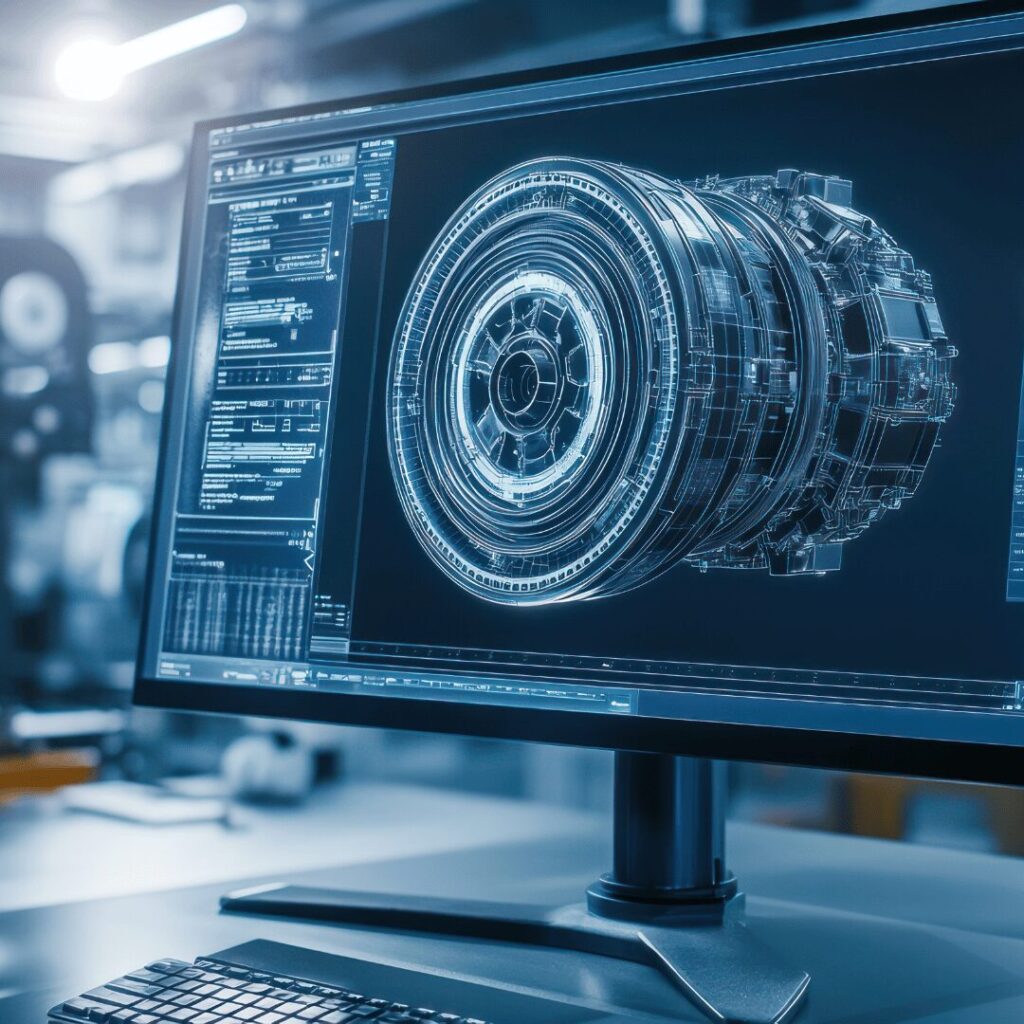
Precision and creativity are often viewed as opposites, yet the most advanced industries today depend on both. Whether in engineering, architecture, gaming, healthcare, or defence, success increasingly relies on the balance between technical accuracy and visual excellence. The software that supports these image-heavy and design-led environments is complex and highly interactive, demanding a new kind of testing approach that validates what the human eye actually sees.
Visual test automation brings artistry and precision together. It verifies the look, feel, and performance of GUI-rich systems, ensuring every visual element behaves as expected. This allows design and engineering teams to work faster, reduce errors, and deliver experiences that are both visually consistent and technically reliable.
The Myth of Automation as Mechanical
Automation is sometimes seen as rigid or repetitive, but in reality, visual automation testing enables creativity. By handling the time-consuming process of manual visual checks, automation frees designers and engineers to focus on innovation and design quality.
A CAD engineer can automatically verify complex 3D renderings across different environments, saving hours of manual testing. A gaming studio can use image-based testing to ensure that UI and graphics remain flawless across devices and resolutions. The result is a smoother creative process and faster delivery without compromising artistic intent.
Where Artistry Meets Precision
In GUI testing, accuracy and design fidelity are inseparable. A single misplaced element or colour variation can impact usability and perception. Visual automation tools ensure that every interface behaves exactly as intended, detecting pixel-level changes that traditional test scripts cannot.
This is the art of accuracy, validating both function and form. By mirroring how people see and interact with software, visual test automation ensures that every product not only works correctly but also looks perfect.
Industries Redefining Testing
Design-centric industries are leading the evolution of image-based testing, but its applications reach far beyond CAD or gaming.
- CAD and design engineering: Visual validation maintains design accuracy across complex 3D models and user interfaces.
- Gaming and simulation: Automated testing safeguards visual quality and performance under heavy load conditions.
- Architecture, construction and BIM: Ensures model consistency and accurate rendering across platforms such as Revit, ArchiCAD and Navisworks.
- Automotive and aerospace engineering: Confirms that visual simulations and digital twins render correctly across tools such as CATIA, Siemens NX and SolidWorks.
- Media, animation and film production: Verifies pixel-perfect rendering across complex visual layers in Maya, Blender and Unreal Engine.
- Product and industrial design: Maintains visual integrity and lighting accuracy in design tools such as Rhino and Creo.
- Healthcare imaging and medical device design: Validates output from GUI-heavy systems like 3D Slicer and MATLAB for clarity and precision.
- Geospatial, mapping and simulation: Checks visual data integrity in software such as ArcGIS or QGIS, where spatial accuracy is critical.
- Energy and industrial control systems: Tests SCADA and DCS interfaces to ensure clarity in monitoring and alarm visualisations.
- Education and training simulations: Supports consistent visual rendering in e-learning, VR and simulation-based training tools.
Across these industries, testing visually is no longer optional. It’s a fundamental part of ensuring quality, accuracy and performance. T-Plan’s technology enables teams to automate as a human would: visually, intuitively, and with precision.
Automation as an Enabler of Creativity
Automation does not replace creative work; it enhances it. By taking care of repetitive validation tasks, GUI automation lets teams focus on what matters – design, innovation, and user experience. When accuracy is automated, human creativity thrives.
This blend of creative freedom and technical discipline produces better outcomes for both businesses and end users. Systems become more reliable, products more polished, and teams more efficient.
Seeing the Bigger Picture
Visual test automation is reshaping how industries approach software quality. It combines accuracy, scalability and human-like perception to deliver confidence in every visual outcome.
At T-Plan, we believe that testing should support artistry, not constrain it. Our solutions for CAD automation, GUI testing, and image-based test automation help design-led and engineering organisations achieve precision with creative freedom.
👉 Discover how T-Plan helps teams automate visually with confidence and clarity. Get in touch today.